
BSRA Test (Bracken School Readiness Assessment)
The Bracken School Readiness Assessment (“BSRA-4”) is an individually administered test for children ages 3:0 to 7:11 (years:months) that measures whether a child has learned the foundational academic concepts needed to succeed in school. It was developed by Bruce Bracken, PhD, first published in 2002, and is currently in its fourth edition (BSRA-4), published by WPS (Western Psychological Services). The BSRA-4 is a brief edition of the comprehensive Bracken Basic Concept Scale, Fourth Edition Receptive (BBCS-4:R).
The BSRA is not a test of intelligence or reasoning ability. It is a test of concept knowledge. It measures what a child has been exposed to and retained, not how they think or problem-solve. This is an important distinction because it means every skill on the test is teachable and practicable.
The stakes are high. Kids are not used to this type of test.
Don’t take a risk. Work with the leader in gifted test prep: Join the 1 Million+ families we have helped over the last 15 years.
Join the 1 Million+ families who we have helped over the last 15 years.TESTINGMOM The Trusted Leader in Gifted Test Prep

What Is the BSRA Used For?
The Bracken serves several purposes depending on the school or program:
Kindergarten and school readiness screening is the most common use. The test determines whether a child has mastered the basic concepts expected before entering formal schooling.
Gifted and Talented program admissions is another major use. Many districts pair the BSRA with a cognitive abilities test (most often the OLSAT) to screen pre-K and kindergarten students for gifted placement.
Private school admissions may also include the BSRA as part of the evaluation for young applicants.
Identifying deficits in concept development allows schools to flag children who may need early intervention in specific areas.
Language impairment and disability assessment is possible because the test requires only a pointing response, making it useful for children whose verbal expression may not reflect their actual understanding.
The Bracken Test scores can be converted to percentile rank scores and standard test scores. The publisher provides guidance on converting standard Bracken test scores into criterion categories. For more details on scoring, visit our Bracken Test Scoring page.
How Is the BSRA Structured?
The test is the same for all children from pre-K through second grade. There are no separate levels. Every child takes the same items, and scoring accounts for age.
The BSRA-4 is administered one-on-one by a trained examiner. It is untimed, though most children complete it in 15 to 20 minutes. The child sits next to the examiner, who shows picture pages and asks the child to point to the correct answer.
The BSRA-4 assesses more than 150 concepts across STEM and STEAM domains, organized into six subtests. It is available in both traditional paper format and through Q-global for digital administration and scoring. The fourth edition features updated full-color artwork that is culturally representative and developmentally appropriate.
What Skills are Necessary for Bracken Success?
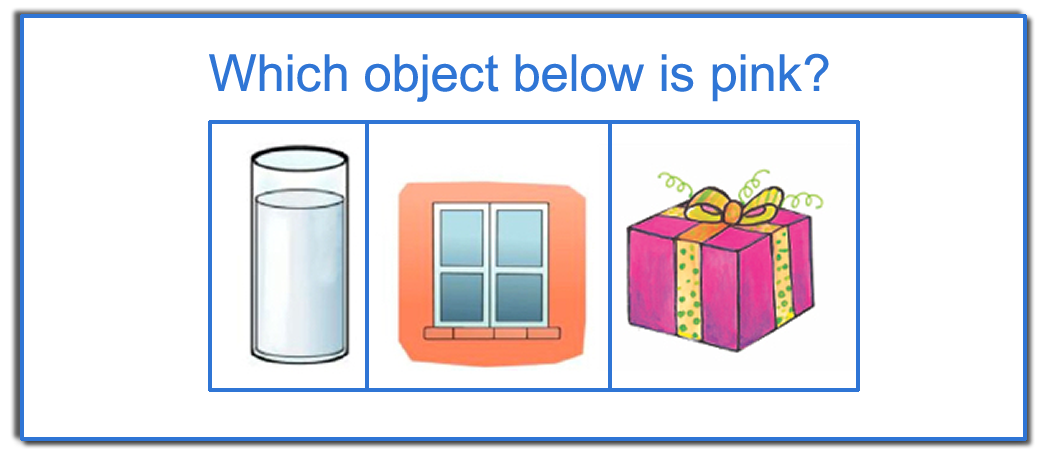
#1. Colors. Your child will need to identify common colors by name. The colors subtest assesses children’s ability to identify and name common colors, including primary colors (red, blue, yellow), secondary colors (green, orange, purple), and color absolutes (black and white). Color recognition is one of the earliest concepts children acquire and is foundational to following classroom instructions.
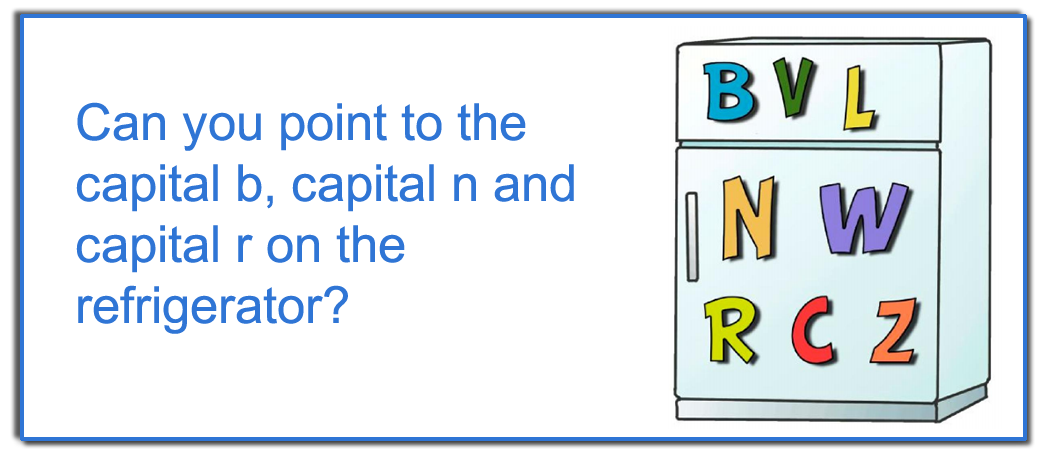
#2. Letters. Your child will also need to know all the letters, both uppercase and lowercase. The test measures knowledge of both uppercase and lowercase letters and assesses their knowledge of sentence structure and composition, since understanding that uppercase letters begin sentences is part of letter knowledge.
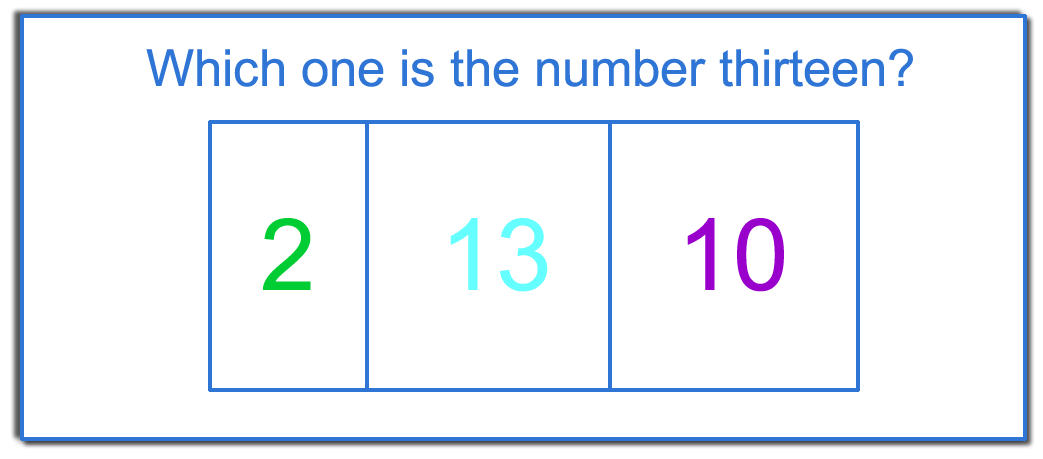
#3. Numbers & Counting. Your child will need to identify single- and double-digit numerals and count from 1 to 99. It also measures the ability to assign a number value to a set of objects (one-to-one correspondence), going beyond rote counting to test whether the child understands that numbers represent quantities.
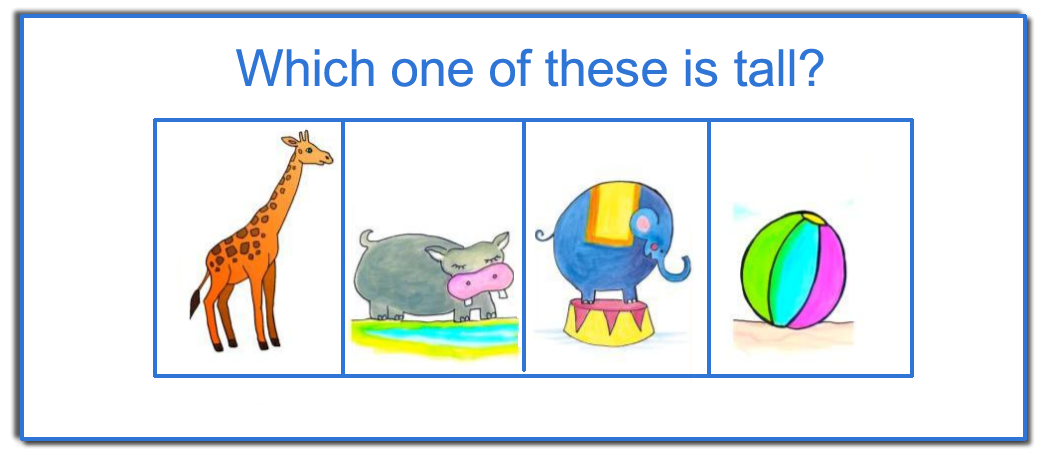
#4. Size and other comparisons. Your child will need to demonstrate knowledge of comparative words based on a specific characteristic, such as short, long, big, bigger, tall, tallest, large, larger, little, tiny, light, or heavy, to name a few. Make sure your child can differentiate or match objects using comparative words such as narrow, wide, shallow, deep, equal, identical, different, or opposite. The test includes concepts describing one-, two-, and three-dimensional objects and measures the ability to match and/or differentiate objects based on one or more salient characteristics.
#5. Shapes. Your child needs to be able to identify basic shapes by name. These would be one-dimensional shapes like a square and a triangle, and 3-dimensional shapes like a cylinder, a cone, and a sphere. The one-dimensional category includes linear shapes; the two-dimensional category includes shapes such as circles, squares, and triangles; and the three-dimensional category includes shapes such as cubes and pyramids.
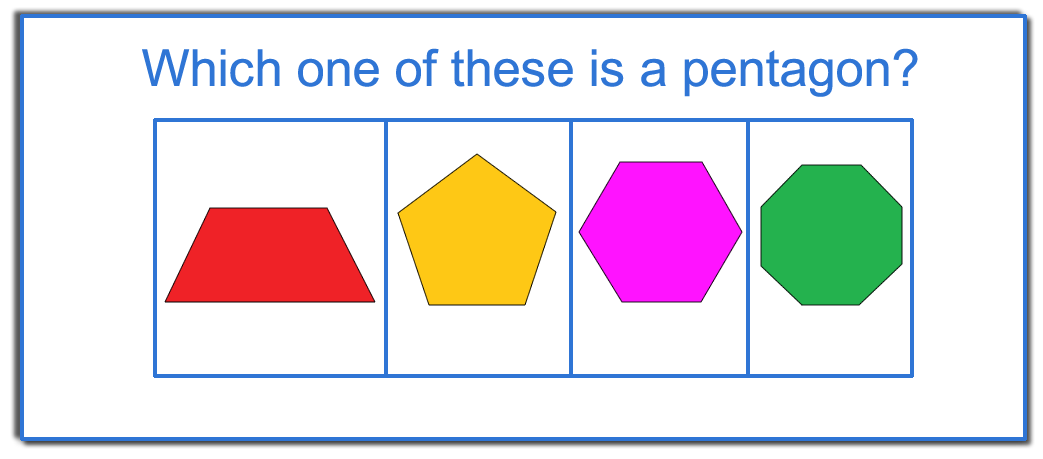
#6. Self-/Social Awareness. Assesses concepts related to a child’s understanding of themselves and their social environment. This subtest was previously part of the broader Bracken Basic Concept Scale but was not included in earlier editions of the school readiness assessment.
PRACTICE TESTING TIPS
- Remind your child to listen carefully to the question before marking the answer, since the question can’t be repeated in the actual test.
- Also, while practicing, ask your child to explain their answer (even if they get the question right). They will not have to explain their answer when tested, but this will help you to know that their thinking is correct.
For additional details on how to practice for the Bracken, visit our page on Preparing for the Bracken.
TESTINGMOM The Trusted Leader in Gifted Test Prep

See if TestingMom.com supports your child’s test by your school district. If you don't see your child's school district listed, check with us! We have practice for other tests as well.
Tell us about your experiences
2 Responses
To Whom It May Concern;
I have question, rather than a comment.
Can the BSRA be administered virtually and still yield results that can be considered reliable?
Susan
I am greatful to Dr. Bruce Bracken for developing such a wonderful tool, for masuring the child’s aquired abilities .I have work with the BSRA for the past three years and i found it very helpful in determining the children abilities before starting with our program (pre- Assessment) and before leaving (post- Assessment).My thanks also goes to all the those that have and are contributing to the betterment of the Bracken Assessment.I only hope that the Bracken Assessment will be a conventional tool for all children .
Thanks
David R. Sonjor
Assisstant coordinator
WE-CARE FOUNDATION
Family Literacy Initiative
Monrovia-Liberia