ADHD in Children: Symptoms, Executive Function & Support
What Is ADHD?
Attention Deficit Hyperactivity Disorder (ADHD) is one of the most common neurodevelopmental conditions affecting children. ADHD impacts a child’s ability to regulate attention, manage impulses, stay organized, and control activity levels. While every child occasionally forgets instructions, loses focus, or acts impulsively, children with ADHD experience these challenges more frequently and intensely, often affecting their performance at school, home, and in social situations.
Today, the term ADHD is used to describe several presentations of the condition. What was once commonly called ADD (Attention Deficit Disorder) is now generally referred to as ADHD, Predominantly Inattentive Presentation.
Common Symptoms of ADHD
Not every child will display all symptoms, and symptoms can vary significantly from one child to another.
Inattention
Children with inattentive symptoms may:
- Have difficulty focusing on tasks or conversations
- Frequently lose schoolwork, homework, or personal belongings
- Forget instructions or daily responsibilities
- Make careless mistakes
- Have trouble completing assignments
- Become easily distracted by sounds, sights, or even their own thoughts
- Struggle with organization and time management
For many children, these challenges can impact academic performance and create frustration for both parents and teachers.
Hyperactivity
Children with hyperactive symptoms may:
- Constantly fidget or squirm
- Have difficulty remaining seated
- Talk excessively
- Seem to be “always on the go”
- Have trouble engaging in quiet activities
Hyperactivity often becomes more noticeable in structured environments such as classrooms, family gatherings, or mealtimes.
Impulsivity
Children who struggle with impulsivity may:
- Interrupt conversations
- Blurt out answers before questions are completed
- Have difficulty waiting their turn
- Act without considering consequences
- Seek immediate rewards rather than long-term goals
Impulsivity can sometimes affect friendships, classroom behavior, and decision-making.
Types of ADHD
ADHD is generally classified into three presentations:
Predominantly Inattentive Presentation
Children primarily struggle with focus, attention, organization, and follow-through.
Predominantly Hyperactive-Impulsive Presentation
Children primarily struggle with excessive movement, impulsivity, and difficulty with self-control.
Combined Presentation
Children experience significant symptoms of both inattentiveness and hyperactivity/impulsivity.
Many children change presentations over time as they mature and develop new coping strategies.
ADHD and Executive Function Skills
Researchers now understand that many ADHD challenges are closely related to weaknesses in executive function skills—the brain’s management system that helps us plan, organize, focus, remember instructions, regulate emotions, and complete tasks.
Children with ADHD often struggle with:
- Starting tasks independently
- Staying organized
- Managing time effectively
- Remembering multi-step directions
- Controlling emotions
- Persisting through challenges
- Monitoring their own behavior
These executive function skills are critical for success both in school and in everyday life.
How HabitCoach Can Help
At HabitCoach, we focus on helping children strengthen the executive function skills that are often challenging for students with ADHD.
Unlike traditional tutoring that focuses primarily on academic content, Habit Coach teaches practical life and learning skills that help children become more independent, organized, and confident.
Our programs help students develop:
- Organization skills
- Time management
- Planning and prioritization
- Emotional regulation
- Task initiation
- Focus and attention
- Goal setting
- Self-monitoring
- Study skills
Through engaging lessons, guided practice, and real-world applications, children learn habits and routines that can reduce daily stress and improve school performance.
Parents often report improvements in:
- Homework completion
- Morning and bedtime routines
- Organization of school materials
- Emotional control
- Independence
- Family relationships
How Is ADHD Diagnosed?
ADHD cannot be diagnosed through a single test. Diagnosis typically involves gathering information from multiple sources, including:
- Parents
- Teachers
- Pediatricians
- Psychologists
- Other healthcare professionals
A comprehensive evaluation often includes:
- Behavior rating scales
- Interviews
- Developmental history
- Academic information
- Observation of symptoms across settings
Because other conditions can sometimes mimic ADHD symptoms, a thorough evaluation is important.
Supporting a Child with ADHD
Children with ADHD can be incredibly creative, energetic, curious, and innovative. With the right support, they can thrive academically, socially, and emotionally.
Helpful strategies often include:
- Consistent routines
- Visual schedules
- Breaking large tasks into smaller steps
- Positive reinforcement
- Executive function coaching
- Academic accommodations when needed
- Parent education and support
The goal is not simply to manage symptoms but to help children develop the skills and confidence they need for lifelong success.
Interventions at Home:
- Hire a One-on-One Tutor. An experienced tutor like ours here at TestingMom.com can meet with your child regularly to help stay organized and focused while completing homework; tutor in educational skills and concepts he or she needs a little more time to master; and reinforce organizational skills by creating and helping your child maintain checklists. Contact Testing Mom today! Call (813) 544-3833 or Email tutoring@testingmom.com.
- Establish Routines. Create and maintain routines for snacks, homework, free time, dinner, school backpack organization, bedtime, etc.
- Join TestingMom.com and GoGoBrain.com. Reach out to our Family Success Team at 877-609-6203 or help@testingmom.com. They can guide you to practice questions to build listening, focus, and working memory skills. Activities on GoGoBrain.com will help your child build skills in listening, following directions, self-control, focus, attention, and working memory – all areas of challenge for children with ADHD.
- Create checklists. Maintain daily checklists for your child that include all the important tasks he or she needs to complete, such as chores and homework. Be sure to frequently remind your child to refer to the checklist to reinforce its use.
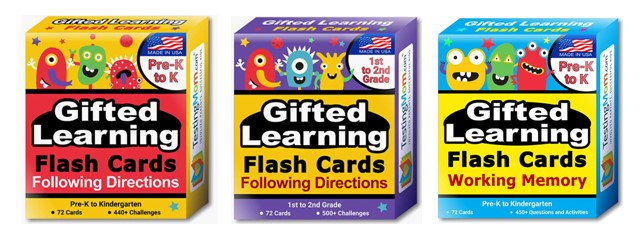
- Work with these Gifted Learning Flashcards from TestingMom.com, available on Amazon.com.