


NYC Gifted and Talented Test Results 47% Increase for City-Wide Applicants
Well, it just became even harder to earn a seat in one of New York City’s highly competitive citywide gifted-and-talented programs.
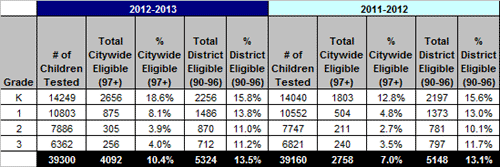
In 2012, there was a reported 47% increase in the number of children scoring at or above the 97th percentile, making competition for citywide programs more intense than ever before.
At the time, The Anderson School—one of the city’s most sought-after gifted programs—was reportedly inviting only families whose children scored in the 99th percentile to attend information sessions, even though the published eligibility cutoff remained the 97th percentile. The dramatic increase in high-scoring applicants meant that, while many children were technically qualified, available seats were still extremely limited.
This was an important reminder that qualifying for a gifted program and receiving an offer of admission are not always the same thing. In highly competitive years, the number of eligible students can far exceed the number of available seats.
Changes Were Already on the Horizon
At the time of this post, New York City had also announced significant changes to its gifted admissions process.
The BSRA/Bracken assessment, which had long been part of the admissions evaluation, was being phased out and replaced by the NNAT (NNAT-2). Many parents wondered how the new assessment would affect future score distributions and admissions outcomes.
As with any major testing change, there was considerable uncertainty about how students would perform under the new system and whether identification rates would remain similar.
What This Meant for Families
The admissions results underscored something we’ve always told parents: gifted admissions are highly competitive, especially in programs with very limited enrollment.
Strong test scores are certainly important, but they are only one part of an increasingly competitive process. As more families become aware of gifted education opportunities, competition naturally increases.
Rather than focusing solely on achieving a particular percentile, parents can best support their children by helping them develop the underlying skills that gifted programs value, including:
- Critical thinking
- Problem-solving
- Vocabulary development
- Pattern recognition
- Listening skills
- Curiosity and creativity
- Confidence when tackling unfamiliar challenges
These skills benefit children regardless of which assessment is used.
Looking Back—and Looking Ahead
The NYC gifted admissions process has continued to evolve over the years, with changes to testing, eligibility criteria, and program structure. While the specific assessments used today may differ from those used in 2012, one thing has remained constant: families continue to seek educational environments that challenge and inspire their children.
Whether your child is preparing for gifted testing, private school admissions, or other academic opportunities, the best preparation focuses on building strong reasoning and learning skills—not simply on preparing for a single test.
At TestingMom, our mission has always been to help parents understand the admissions process while giving children the confidence and foundational skills they need to demonstrate their full potential.
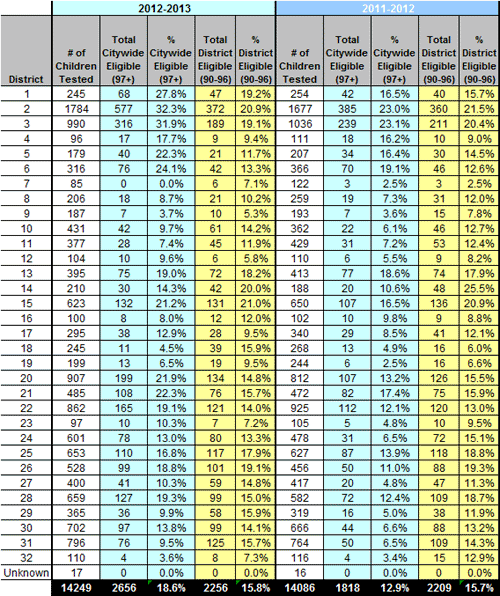
Below are 2 charts showing the overall results for gifted and talented scores, followed by the results by district for 2012:





Tell us about your experiences