


This post is a continuation of our series on everyday activities for WPPSI IV Subtests. Last week, we discussed practicing for the WPPSI IV Verbal Subtests
Today, I want to focus on everyday activities that can help your child with the WPPSI-IV Nonverbal subtests. These questions do not require verbal responses and are often used to determine whether a child is gifted. Additionally, these subtests may be useful for evaluating children who are deaf or hard of hearing, or who are suspected of having language or autism spectrum disorders.
What’s on the WPPSI-IV Nonverbal Index Subtests, Anyway?
Your child will take either 3 or 6 subtests on the WPPSI-IV, depending on their age. These are outlined below. (The ages are years, then months, so 2:6 means 2 and a half years old.)
Ages 2:6 – 3:11 Nonverbal Index
Block Design has your child recreate block patterns using red and white 3-D blocks with solid or diagonal designs. Patterns are recreated after examining actual models and printed images.
Object Assembly measures the time it takes your child to arrange various pieces into a meaningful whole image.
Picture Memory tests your child’s ability to select a picture from a few options, after the child has been shown a stimulus page.
Zoo Location has your child view one or more animal cards on a zoo layout for a specified time, then places each card back in its previously viewed location.
Ages 4:0 – 7:7 Nonverbal Index
Block Design has your child recreate block patterns using red and white 3-D blocks with solid or diagonal designs. Patterns are recreated after examining actual models and printed images.
Object Assembly measures the time it takes your child to arrange various pieces into a meaningful whole image.
Matrix Reasoning is when your child figures out what is missing in a 4-box matrix based on the relationships among the pictures in the top two boxes.
Picture Concepts is where your child chooses 2 to 3 pictures that belong together after looking at 2 to 3 rows of various pictures.
Picture Memory tests your child’s ability to select a picture from a few options after the child has been shown a stimulus page.
Zoo Location has your child view one or more animal cards on a zoo layout for a specified time, then places each card back in its previously viewed location.
Bug Search is a child-friendly adaptation of Symbol Search; this subtest features engaging, colorful stimuli of familiar bugs rather than abstract images. Your child is shown a bug and must recognize if there is a matching bug among the answer choices.
Cancellation features clothing targets and other objects that are very familiar to young children. Two items include one with a random arrangement of objects and one with a structured arrangement. Comparison of item performance can provide useful information about how the child’s ability varies across modes of presentation.
Animal Coding is an adaptation of Coding. This subtest pairs familiar and appealing animals with basic shapes rather than pairing abstract symbols with basic shapes. The number of paired associates is reduced from five to three, based on the more limited memory capacity of young children.
Everyday Activities that Help Your Child with the WPPSI IV
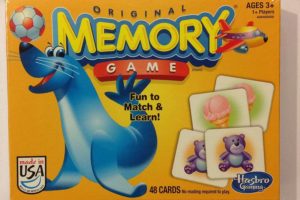 Play memory games with your child. These are made now with almost any “favorite” character or subject that interests your child. The idea is to build your child’s concentration and memory skills by turning all the cards over, then having them flip them over two at a time to find the matches. Or you could even make your own cards, print the pictures, and glue them onto square-cut stock paper.
- Logic problems are both fun and work that connect the part of your child’s brain responsible for associating cause and effect and for learning how to eliminate impossible answers. You can find tons on Pinterest to print and practice. Here is one you can print and try now.
- Read books aloud to solidify knowledge and comprehension. Knowledge and comprehension are your child’s understanding of information, social standards of behavior, and common sense that children his age usually understand.
- Find coded coloring pages, where your child colors a certain “code” a specific color. This is especially fun when the picture is hidden until the code reveals a fun character or animal!
- Have your kids play games with design blocks. These blocks are similar to the pattern questions on the test and can help build the skills needed to excel on these types of questions.
- One of the best ways to prepare for the WPPSI is to use the IQ Fun Pack. IQ Fun Pack utilizes questions from some of the most popular tests (including the WPPSI) to help prepare your kids for the test in a way that’s challenging and so much fun that they will love test prep. Click here to see the perspective of parent who has had success with IQ Fun Pack.
The key is to be engaged with your child. Talk about everything! Ask questions to gauge your child’s understanding. You can enjoy offline activities and turn them into learning opportunities!
Finally, check out our other resources on our WPPSI™ IV Test pages:




Tell us about your experiences