
What is the KBIT Test? – TestingMom.com
KBIT-2® Test Preparation for Gifted Program Admissions
The Kaufman Brief Intelligence Test, Second Edition (KBIT-2®) is a short, individually administered intelligence test commonly used to screen children for Gifted and Talented programs. Many school districts use the KBIT-2 as a pre-qualifier or initial screener before inviting students to complete a full IQ evaluation, such as the WISC-V or WPPSI.
Because results from the KBIT-2 can determine whether your child advances to further testing, preparation matters—even though the test measures reasoning and problem-solving rather than school-taught knowledge.
What Is the KBIT-2 Test?
The KBIT-2 is a 20-minute assessment that evaluates a child’s verbal and non-verbal intelligence. It produces three scores:
Verbal IQ
Non-Verbal IQ
Composite IQ Score
These scores are often used by schools to:
Identify gifted potential
Determine eligibility for gifted services
Decide whether additional cognitive testing is needed
Because the test is brief and fast-paced, children benefit greatly from familiarity with question types and expectations.
KBIT-2 Test Breakdown: Question Types
The KBIT-2 includes three distinct question types, each measuring a different aspect of reasoning ability.
Verbal Knowledge
Children are shown a set of pictures and asked to identify the image that best represents a spoken vocabulary word.
These questions assess:
Vocabulary development
Verbal reasoning
Concept understanding
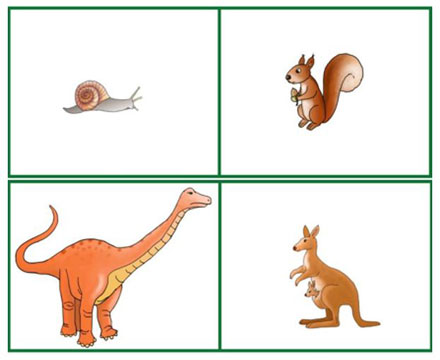
There are Verbal Knowledge questions where the child is shown a group of pictures and asked to point to one picture that represents a vocabulary word. The question below is a practice item for this type. The child is asked to point to a “marsupial.” They must know that marsupials are pouched mammals, so the answer is the kangaroo.
Matrices (Non-Verbal Reasoning)
Matrices questions measure pure reasoning ability, not academic knowledge. Children must determine which image or figure logically completes a pattern or relationship.
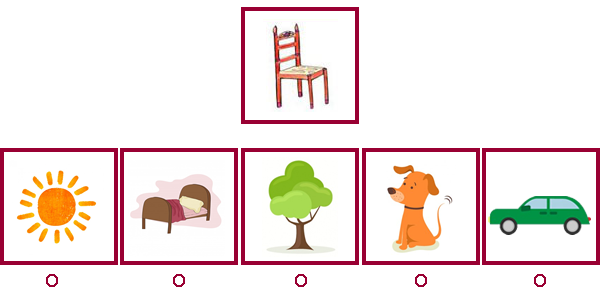
Younger children may match related objects (e.g., chair → bed)
Older children work with 4-box or 9-box visual matrices
These question types are unfamiliar to most students, which is why practice is especially valuable.
For younger children, with this type of question, the child is shown one picture and then a series of possible answers. He is asked to point to the answer choice that matches the picture on top. For example, there might be a picture of a chair on top, then pictures below that include the sun, a bed, a tree, a dog, and a car. The chair goes with the bed, so that would be the answer.
For older children, Matrices are presented as 4- or 9-box matrix using pictures or figures. If your child completes all the Matrices in this section, you can look throughout our site for other, similar questions. Matrix or analogy questions are among the most common on these tests. You’ll find many similar practice questions under our Reasoning By Analogy Questions for the NNAT-2 test. For younger children, you can also use Picture Concept questions from the WPPSI test to practice this part of the KBIT-2.
Riddles (Verbal Reasoning)
Riddles require children to listen carefully to clues and identify a word that fits all conditions.
Examples range from simple:
“What is made of metal and used to eat soup?”
to more complex:
“What do you need to go to a movie, must pay for, and can only use once?”
Riddles measure:
Listening comprehension
Logical deduction
Verbal reasoning under time pressure
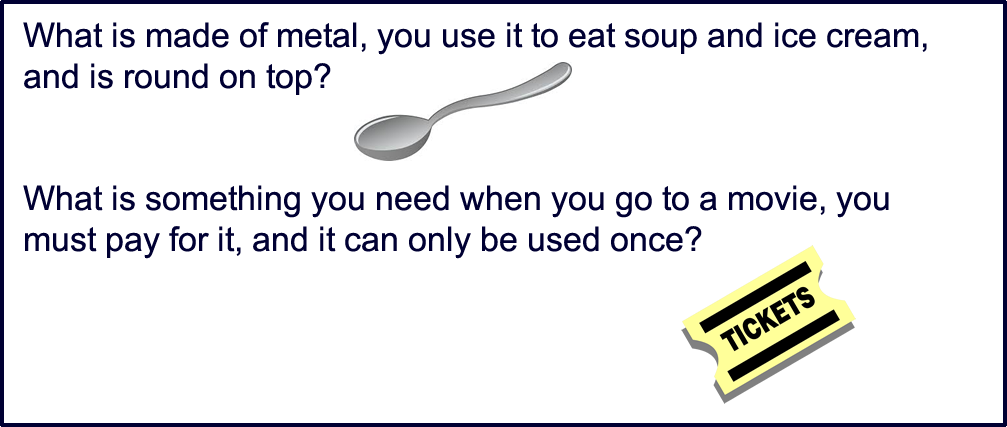
With this specific question, children are given a few hints about the word they are looking for. The riddles start out very easy, such as “What is made of metal, you use it to eat soup and ice cream, and is round on top?” (a spoon) to something more complex such as, “What is something you need when you go to a movie, you must pay for it, and it can only be used once?” (a ticket)
Why the KBIT-2 Is Ideal for Identifying Gifted Potential
The KBIT-2 is designed to measure innate intelligence, not classroom performance. This makes it especially valuable for children who:
Are bored or under-challenged in school
Think creatively, but don’t test well academically
Have strong reasoning skills that aren’t reflected in grades
With proper preparation, many children demonstrate their true cognitive strengths on this assessment.
How TestingMom.com Helps Your Child Prepare for the KBIT-2
TestingMom.com offers targeted support for gifted and IQ-style assessments, such as the KBIT-2.
✔ Practice Questions That Mirror the Test
Our KBIT-style practice questions help children:
Understand unfamiliar question formats
Practice reasoning and pattern recognition
Build confidence before test day
✔ Interactive Online Learning
Children learn best when they’re engaged. TestingMom provides:
Interactive games and challenges
Age-appropriate explanations
Skill-building activities that strengthen reasoning
✔ 1-to-1 Online Tutoring
For families who want extra support, TestingMom offers online tutoring with experienced gifted-test tutors who:
Break down KBIT-2 question types
Teach effective problem-solving strategies
Help children stay calm, focused, and confident
100 Free Gifted Practice Questions
Families can begin right away with 100 free gifted practice questions, no commitment required.
Prepare With Confidence
The KBIT-2 may be brief—but its impact can be significant. Helping your child understand the test format, question styles, and expectations can make a meaningful difference in their performance.
With expert-designed practice, interactive learning tools, and personalized tutoring, TestingMom.com helps children walk into the KBIT-2 confident, prepared, and ready to succeed.
KBIT Test Breakdown
TestingMom.com offers a variety of practice questions for the KBIT, along with interactive games. To get a sample of our questions, please view our 100 free practice questions.
See if TestingMom.com supports your child’s test by your school district. If you don't see your child's school district listed, check with us! We have practice for other tests as well.
Tell us about your experiences
2 Responses
hmmm i wouldn’t do well on these tests. take the sample question above: “For example, there might be a picture of a chair on top, then pictures below that include the sun, a bed, a tree, a dog, and a car. The chair goes with the bed, so that would be the answer.”
i would have picked the car because you sit on a chair, wake, and you sit on/in a car, also awake (esp if driving)…
i discounted the bed because you sit up on a chair, awake, while you lay down on a bed, and sleep.
The above examples are great