
i-Ready 5th Grade Sample Questions
Choose a ProgramThe i-Ready Diagnostic, now called i-Ready Inform™ for Reading and Mathematics, is an adaptive online assessment that helps teachers understand your child’s current Reading and Math skills and determine what they’re ready to learn next.
Because the assessment is adaptive, question difficulty changes based on your child’s responses. When your child demonstrates a strong understanding of a skill, they may receive more challenging questions. When they struggle, the assessment can adjust to gather more information about the skills they’ve mastered and those that still need development.
That means your fifth grader may encounter questions covering material that hasn’t been taught in class yet.
That’s normal.
Students aren’t expected to answer every question correctly. Challenging questions help an adaptive assessment determine the range of skills a student currently understands.
Here are some of the Reading and Mathematics skills a fifth grader may encounter.
Math
Algebra and Algebraic Thinking – Fifth graders work with numerical expressions, patterns, and relationships. They may use parentheses or other grouping symbols, evaluate expressions, analyze numerical patterns, determine unknown values, and solve multi-step problems. These skills help build the foundation students will need for increasingly algebraic mathematics in middle school.
Numbers and Operations – Students deepen their understanding of place value and operations with whole numbers, fractions, and decimals. Questions may involve multi-digit multiplication and division, comparing and operating with fractions, adding and subtracting decimals, and using place-value relationships to solve problems.
Geometry – Students work with geometric figures and their properties and begin using coordinate grids. They may classify two-dimensional figures based on their attributes, reason about relationships among shapes, and graph or interpret points on a coordinate plane.
Measurement and Data – Students solve measurement problems and interpret data presented in different formats. Skills may include converting measurements within a measurement system, interpreting line plots and other data displays, understanding volume, and solving real-world problems involving measurement and data.
Reading
By fifth grade, students are expected to read increasingly complex literary and informational texts and do more than simply recall what happened.
They need to analyze, infer, compare, interpret, and support their answers with evidence from what they’ve read.
Vocabulary – Students demonstrate their understanding of increasingly sophisticated words and phrases. Questions may require them to use context clues, Greek and Latin roots, prefixes, suffixes, word relationships, and other strategies to determine meaning. Students may also work with figurative language, multiple-meaning words, and academic vocabulary.
Comprehension: Literature – Students read stories, poems, dramas, and other literary texts and demonstrate a deeper understanding of their meaning. They may determine themes, analyze characters and their motivations, make inferences, compare characters or events, understand figurative language, identify point of view, and use specific details from the text to support an answer.
Comprehension: Informational Text – Students read increasingly complex nonfiction texts and analyze how information is presented. They may determine main ideas, identify supporting details, explain relationships among ideas or events, compare information from different parts of a text, analyze text structure, determine an author’s purpose or point of view, and use evidence to support conclusions.
Phonics and Word-Reading Skills – If a student’s responses indicate that additional information about foundational reading skills is needed, the adaptive assessment may include questions involving phonics, decoding and word recognition. This can help identify whether difficulty with more advanced reading tasks is connected to underlying word-reading skills.
High-Frequency Words – Some students may also encounter questions on recognizing frequently used words if the assessment needs additional information about foundational reading development.
What Should My 5th Grader Practice for i-Ready?
At this age, preparation should focus less on predicting specific test questions and more on making sure your child has strong underlying Reading and Math skills.
For Reading, practice:
- Reading increasingly complex fiction and nonfiction
- Determining main ideas and themes
- Identifying supporting details
- Making and supporting inferences
- Summarizing
- Comparing characters, events, ideas, and texts
- Understanding point of view and author’s purpose
- Analyzing text structure
- Using context clues
- Understanding figurative language
- Building academic vocabulary
- Using roots, prefixes, and suffixes
- Finding textual evidence to support an answer
For Math, practice:
- Place value
- Multi-digit multiplication and division
- Numerical expressions
- Multi-step word problems
- Fractions and fraction operations
- Decimals and decimal operations
- Measurement conversions
- Volume
- Graphs and data
- Coordinate planes
- Geometry
- Mathematical patterns and relationships
Practice the Thinking, Not Just the Answer
By fifth grade, children are increasingly expected to explain why their answers make sense.
When practicing at home, don’t stop as soon as your child gives you the correct answer.
Try asking:
“How did you figure that out?”
“What information helped you choose that answer?”
“Can you prove it from the passage?”
“Is there another way to solve the problem?”
Those questions encourage your child to think about the process instead of simply searching for an answer.
That’s important in both Reading and Math.
Why Is My Child Seeing Questions That Are Too Hard?
Your fifth grader may come home from the assessment and tell you:
“There were questions we haven’t even learned yet!”
Don’t panic.
Because the assessment is adaptive, students can encounter more challenging material as the test gathers information about what they know and what they’re ready to learn next.
Before testing, tell your child:
“Some questions may feel easy, some will make you think, and some may be really hard. You’re not expected to know everything. Take your time, think through each question, choose the best answer you can, and keep going.”
Also remind your child not to judge how they’re doing based on how difficult the test feels.
A difficult question doesn’t necessarily mean they’re doing poorly.
An easier question doesn’t necessarily mean they’re doing poorly either.
The best strategy is simple: focus on the question in front of you and give it your best effort.
Practice i-Ready-Style Questions
TestingMom’s i-Ready-style practice can help fifth graders strengthen the Reading and Mathematics skills they may encounter and become more comfortable working through challenging questions.
Because the assessment is adaptive, you can’t predict the exact questions your child will receive—and that’s not the purpose of good test preparation.
The goal is to help your child strengthen the underlying skills, recognize different types of problems, practice effective strategies, and develop the confidence to keep thinking when an answer isn’t immediately obvious.
By fifth grade, knowing what to do when you don’t know the answer right away is a skill in itself.
Below are sample questions representative of the 5th Grade questions your child will see on the test, but they are not taken directly from the i-Ready Inform being administered this year.
1. What is the antonym of hostile?
A. barren
B. friendly
C. comfortable
D. fertile
Read the following pair of passages:
Passage A
I was helping mom put the shopping in the trunk, but her phone rang. She walked to the wall to get a better signal, and I finished emptying the cart. I must have nudged it when I reached up to close the trunk. A car started up on the next level, so I didn’t realize for a few seconds what was happening. When I turned around, the cart was already hurtling down the ramp straight towards an oncoming car. I was convinced there would be a terrible crash and put my hands over my eyes.
Passage B
The boy, Josh Bradfield, was praised by police for his actions. He had been skateboarding in the multi-story parking garage when he saw a shopping cart rolling down the ramp, unattended. Moving at considerable speed, he was able to intercept the cart moments before it would have crashed into Mrs. Baker’s car. Mrs. Baker, 76, was said to be shocked but unhurt. Police stated that Josh’s timely intervention probably saved her life.
2. What does Passage A suggest about the location of the cart as the narrator closes the trunk?
A. It is behind her.
B. It is near her mother.
C. It is at the head of the ramp.
D. It is between her and the car.
3. Where would Passage B most likely be found?
A. In a school essay
B. On a blog
C. In a news report
D. In a sports magazine
4. Which symbol goes in the blank?
7 ounces ____ 1 pound
A. >
B. <
C. =
D. ≥
5. What is the distance from the purple point to the blue point?

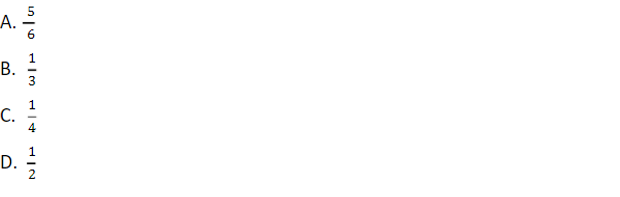
Identify the choice that best completes the statement or answers the question.
6. Ninety-nine is three times a number minus one.
A. 99 = 3x – 1
B. 99 = 3 + x – 1
C. 99 = 3x + 1
D. 99 = 1 – 3x
7. The future perfect tense verb describes an action that will occur by using what words with the past participle of the verb?
A. has
B. had
C. been
D. will have
8. Which of the following words is not formed from the root word legs, meaning law?
A. legs
B. legitimize
C. legislature
D. legal
9. In the following sentence, which word should the comma come before?
I don’t like to wear my shoes at the beach sand in my shoes makes me uncomfortable.
A. my
B. shoes
C. in
D. sand
Are you ready to start preparing your child for their i-Ready Diagnostic for 5th Grade? Would you like more i-Ready practice for 5th Grade? We have over 1,200 i-Ready Diagnostic practice questions for 5th Grade, plus expert tutors, engaging test prep, and more! Try out our 100 Free Questions today!
See if TestingMom.com supports your child’s test by your school district. If you don't see your child's school district listed, check with us! We have practice for other tests as well.
Tell us about your experiences
12 Responses
We want to practice
I need this for my kids to practice
Working with my grandson Carter. Great practice!
It was good.
does it have the ansewers so i can check my work
This was easy because i have a 4.0 GPA.
I WANT MORE!!
I love it it really helps me understand the meanung of a lesson wich is, try your best!
Hello, my students in 5th grade scored 527-543 on the reading diagnostic test. How are they doing according to your percentile score?